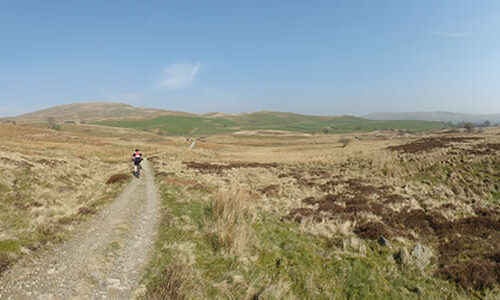
Riding a step down at The Forest Of Dean
Probably one of our most requested skills to coach is jumps! It’s not easy and can be scary. Check out the process we used to help this rider progress on a jump he found challenging.
Video link as usual so you can watch at the bottom of email – Happy air time ✌
Progressing jumps by avoiding these common rider mistakes
Below we describe the process we went through with this coaching client to help him overcome these common mistakes. We had been working with this rider over a few sessions and he had received coaching on core skills first to get to this point. We’d not recommend going straight into learning jumps before working through core skills – with or without a coach.
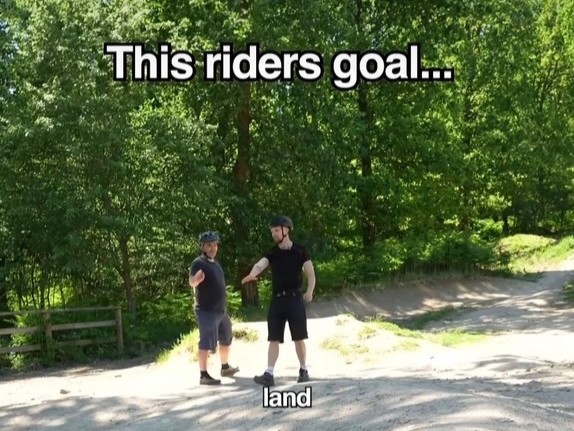
1. Fist we picked the right goal
If riders have never got their wheels off the ground before, we’d definitely not start with a big gap jump. It’s too easy to head into the woods, watch really good riders making big jumps look easy, and decide to start too big.
Often, when riders come to us, they’re excited to jump high.
This is achievable for everyone with the right approach, time, and practice, but managing expectations over time is crucial to keep the process safe. Setting the goal too high is very dangerous and can quickly become demoralising.
This rider had jumped before but was scared of gaps, so this step-down gave him the aspiration to make it to the landing slope, while also giving him the wiggle room to make mistakes without the risk being too high.
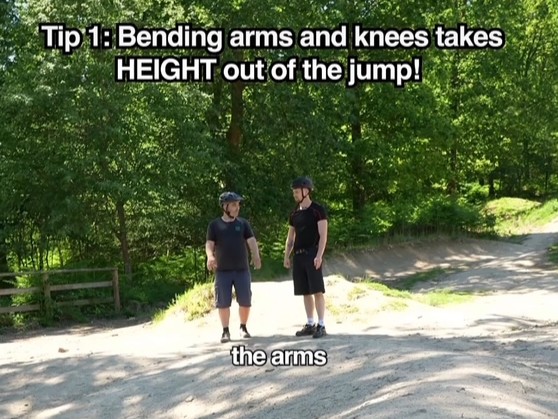
2. We addressed the reason he was not optimising the height he could get from the take-off.
If you watch most riders ride over jumps you’ll see that to some degree they bend their arms and legs as they leave the lip (the top of the ramp). Lots of riders bend them a lot as an instinctive reaction, this feels safer, but it has two negative impacts:
- You are actually stopping the ramp doing what it’s designed to do. By absorbing it you will stay lower.
- When you bend your legs the forces can easily throw your back wheel in the wrong direction causing the bike to push your weight forwards over the bars.
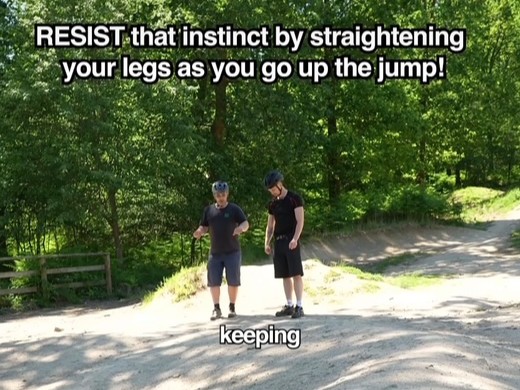
3. Resist the instinct
We worked with him to focus almost all effort on keeping the legs as straight as possible as he left the lip, resisting the jump and even pushing back against it.
The instinctive part of our brains thinks that trying to make your bike fly is a bad idea. Combine this with the forces pushing against the riders legs and keeping them straight can be really hard – it requires slow and very conscious progress to build this new habit.

4. Finding and committing the right speed for the jump
Once we’d practised keeping his arms and legs straight, we moved on to working out the speed he needed and more importantly, committing to it.
We talked through a few ways he could get a good gauge of the right speed to clear the jump. We started by watching other riders go through it, then discussed how we could use a technique of following riders in who were already clearing the jump successfully.
As his coach, I was also able to help judge his speed and use video feedback to show him what was working and what needed adjusting.
Once we’d established the right speed, the next challenge was committing to it. As you’ll see in the video, we worked on creating a clear commitment point where he agreed not to brake beyond a certain marker. In this case there was a post by the side of the trail, but It could have been a tree, or even a cone or bag placed next to the trail. Anything that gave him a clear point where the decision had already been made and he could focus on the jump itself.
The results follow 🙂
Want to see this process in action? Click here.
Inspire to get coached? Click here to check out our coaching options.
Don’t miss a trick and get this kinda of content sent to your inbox weekly? Sign up here